
The “4 most notable features” of Histomoniasis in chickens are interesting characteristics that also help summarize some key aspects of the disease.
Many poultry farmers are aware that Histomoniasis is extremely dangerous to chicken health and can cause significant economic losses. Therefore, most farmers understand its clinical signs and prevention methods, but they may not know that Histomoniasis in chickens currently holds four remarkable distinctions.
Histomoniasis in chickens is caused by the protozoan parasite Histomonas meleagridis. It commonly occurs in chickens from 2 weeks to 4 months of age. In practice, the disease is most frequently observed in chickens around 1 month old, and the older the chickens become, the more severe the disease tends to be.
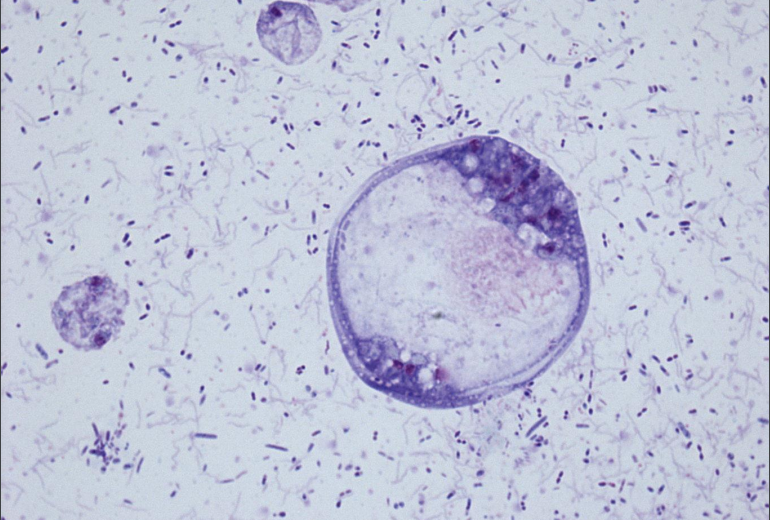 Image of Histomonas parasite
According to disease studies, Histomoniasis currently holds the following four notable distinctions:
1. THE NEWEST PARASITIC DISEASE
– Most parasitic diseases in chickens were discovered and reported very early:
– In 1863, COCCIDIOSIS in chickens was discovered by Rivolta in the feces of chickens showing bloody diarrhea.
– Avian Hemoparasitic Diseases in poultry and waterfowl were first discovered in 1904, and officially confirmed and published by Sambon in 1908.
– Histomoniasis in chickens was discovered relatively late, especially in Vietnam. It was not identified until March 2010. Therefore, Histomoniasis is considered the newest parasitic disease at present.
2. THE DISEASE WITH THE LARGEST AND HARDEST CECAL CORES
In cases of cecal coccidiosis, necropsy at the terminal stage may reveal cecal cores; however, these are usually soft and not very large because they are essentially dried blood clots. In contrast, at the terminal stage of Histomoniasis, large cecal cores with hard white central material are commonly observed.
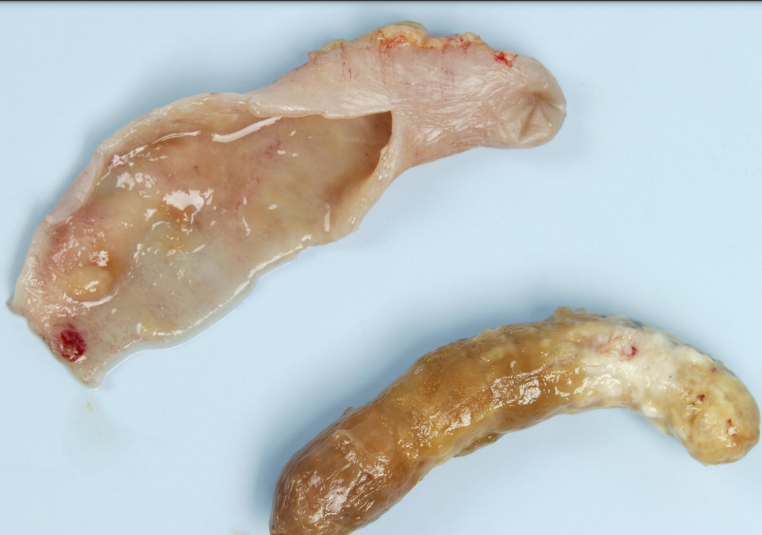 Image of Histomoniasis
3. THE HIGHEST MORTALITY RATE
According to statistics, this disease does not usually cause sudden mass mortality, leading many farmers to underestimate its severity. However, the actual mortality rate of Histomoniasis can reach up to 95% — a figure that deserves serious attention.
4. THE DISEASE CAUSING THE GREATEST CECAL WALL THICKENING
Most diseases cause the cecal wall to become necrotic and thinner. However, Histomoniasis causes the cecal wall to thicken, resulting in narrowing of the cecal lumen.
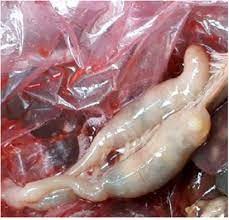 Image of Histomoniasis
The four notable distinctions of Histomoniasis in chickens are not only interesting facts but also useful information that helps poultry farmers differentiate Histomoniasis from other diseases through its characteristic clinical and pathological features.