
To protect a healthy duck flock and maintain optimal farming productivity, understanding the characteristics of avian aspergillosis is paramount.
Avian aspergillosis in ducks is an infectious fungal disease that is very common in duck farming, occurring in both ducklings and adult ducks. The disease causes significant economic losses by increasing mortality rates, reducing growth rates, and incurring high treatment costs.
Because avian aspergillosis shares many clinical signs with other conditions such as bacterial infections, misdiagnosis and the misuse of medications often lead to ineffective treatment, causing the ducks’ condition to progressively worsen instead of recovering.
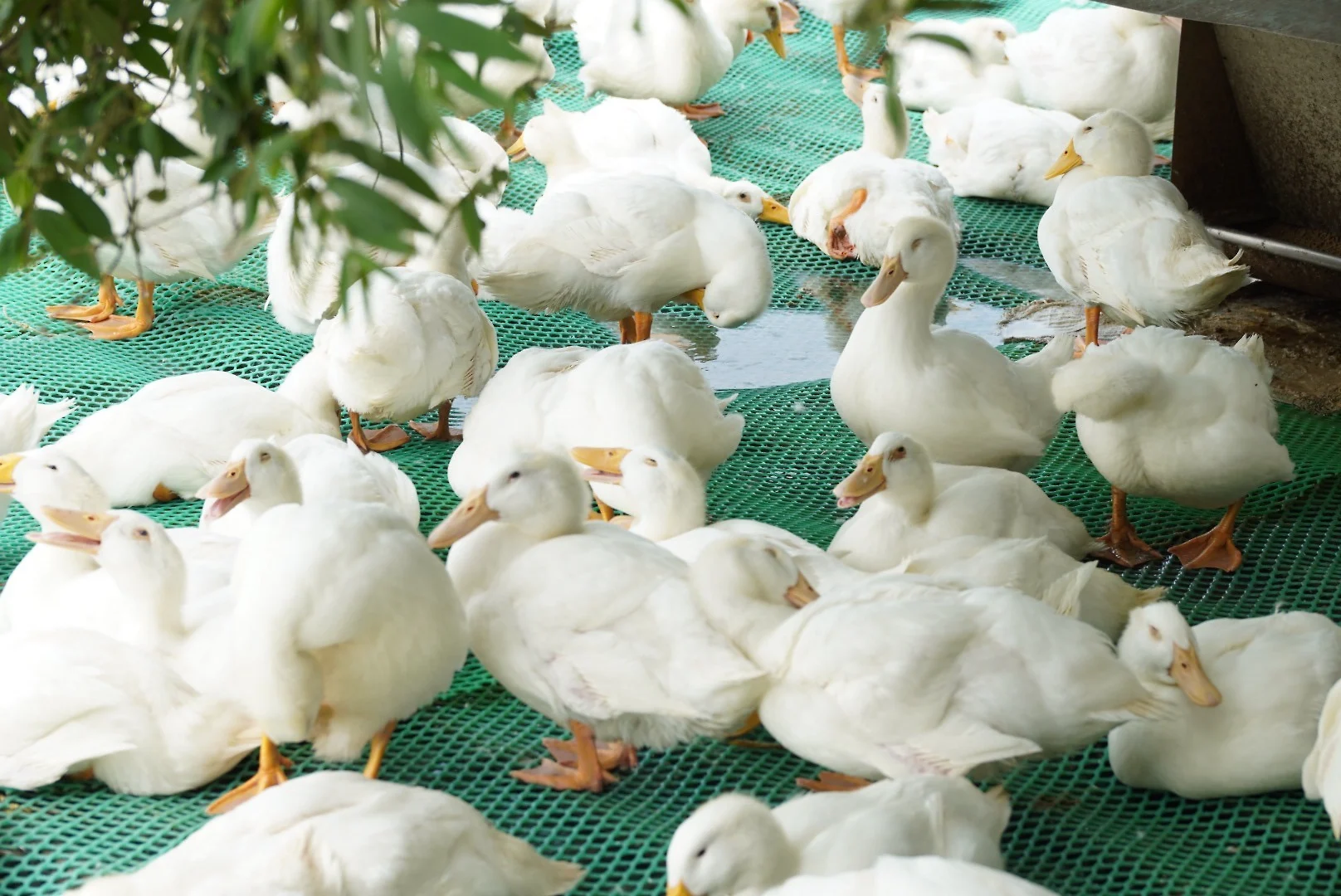 Image of duck farming
1. CAUSES
Duck aspergillosis is caused by the fungus Aspergillus. Fungal spores develop on animal feed such as corn, soybeans, rice, etc., and are also present in straw and litter materials.
The primary condition that enables Aspergillus to thrive is the environment within the farm. Poorly ventilated and damp housing is the main cause of infection in the flock. When ducks ingest or inhale fungal spores, white nodules appear in their lungs and air sacs.
2. SYMPTOMS
– Ducklings: Loss of appetite, respiratory distress (dyspnea), nasal discharge, and diarrhea.
– Adult Ducks: Progressive emaciation with symptoms of respiratory distress (dyspnea), reduced feed intake, and increased thirst.
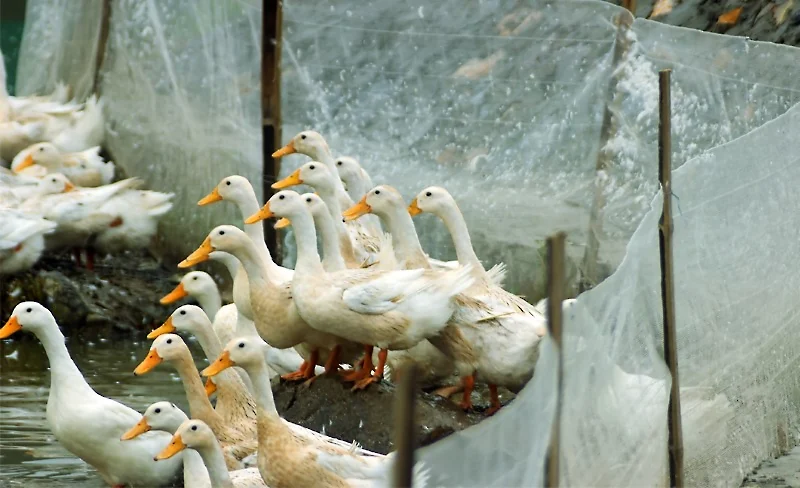 Image of duck farming
3. LESIONS
In the lungs: Presence of multiple fungal nodules (granulomas), pea- to corn-kernel-sized, grayish-white or pale yellow, hard to the touch.
In the air sacs: The air sac membranes thicken, become opaque, and may be covered with a grayish pseudo membrane or exhibit tiny fungal nodules.
Other organs: In severe cases of fungal infection, lesions can spread to the hepatic capsule, pericardium, trachea, and gastric mucosa.
4. PREVENTION
– Avoid using moldy feed or pasturing ducks on outdated fields (where rice and straw are contaminated with fungus).
– Keep the housing dry and well-ventilated and regularly replace the bedding/litter material.
– Periodical disinfection and decontamination of the poultry housing, averaging 02 times per week.
– Use Nystatin – 56 for prevention at a dosage of 01 kg/ton of feed.
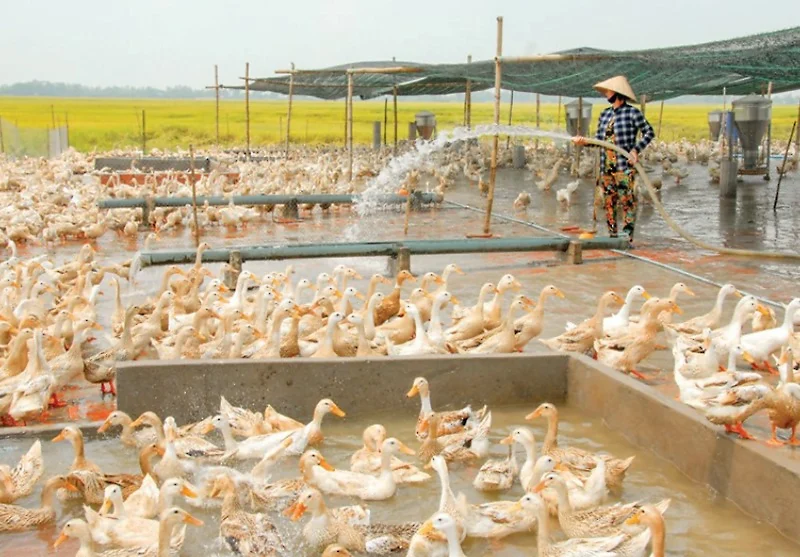 Image of duck farming
5. TREATMENT
– Eliminate the sources of infection, which include contaminated feed or litter materials: Discontinue suspected moldy feed, replace it with fresh feed, and replace the bedding material.
– Create an unfavorable environment for fungal growth:
+ Use finely ground NaHCO3 dissolved in drinking water for ducks at a dosage of 01 tablet per 3-5 kg of body weight.
+ Administer Iodine dissolved in drinking water at a concentration of 1-2‰.
– Use antifungal drugs: Administer Nystatin orally to ducks for a continuous treatment period of 03 consecutive days.
– Disinfect and decontaminate poultry housing: Mix 15 ml of Iodine with 4 liters of water to spray and sanitize the farm premises.
– Enhance digestion, boost resistance, and detoxify ducks using the following preparations: Glucose, Vitamin C. Supplement additional Vitamin A into the feed ration.
Strict control over feed sources and bedding materials, combined with supportive immune-boosting products, is the key to helping duck flocks safely recover from avian aspergillosis.