
Goslings from hatch to 4 months of age are highly susceptible to cold stress because their thermoregulation is still underdeveloped, unlike adult geese. Therefore, proper brooding management is essential to ensure healthy growth and optimal development.
Brooding management plays a critical role in determining gosling quality and the overall productivity of goose farming. So, what are the essential brooding practices required to raise healthy, high-quality goslings for future production?
1. BROODING HOUSE
The brooding house must be thoroughly cleaned, disinfected, and sanitized before use. Disinfectants such as IONDIN@ or DEXON SUPER can be used to spray and disinfect the entire brooding area.
Recommended stocking density:
– 1–7 days of age: 10–15 goslings/m²
– 8–30 days of age: 6–8 goslings/m²
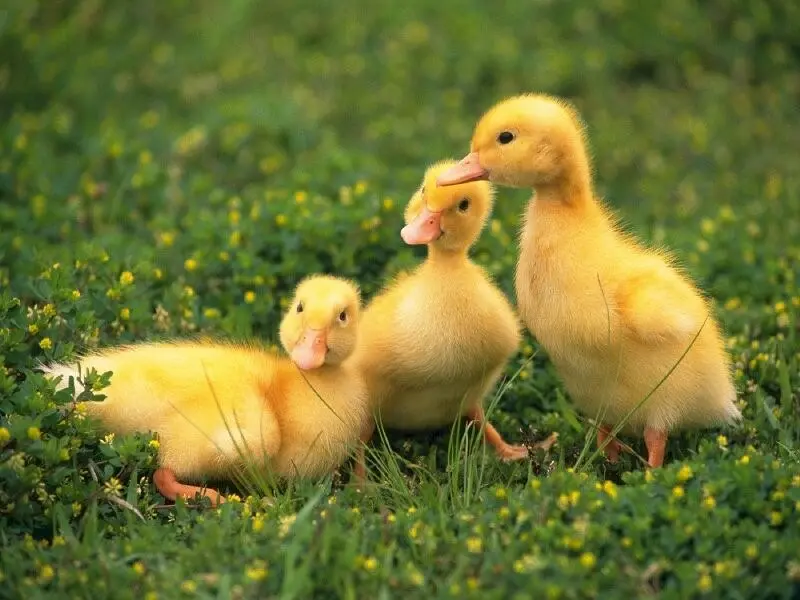 Image of gosling farming
2. BEDDING OR FLOOR MATERIAL
Like brooding chicks or ducklings, goslings require dry, clean bedding, such as dry rice husks or dry straw. Straw is considered the best bedding because it helps keep the goslings’ abdominal feathers dry, improves feather quality, and reduces mortality. However, straw bedding should be replaced every 2–3 days to maintain hygiene.
3. EQUIPMENT REQUIRED
– Brooder guard: Use bamboo, rubber, or metal sheets approximately 50–60 cm high to form a circular brooder, similar to those used for chicks.
– Heat lamps: Prepare several infrared heat lamps to provide warmth.
– Cover sheet: Use a clean tarpaulin or plastic sheet to cover the brooder.
– Feeders and drinkers: Use small feeders and drinkers suitable for young goslings.
– Starter feed: Finely ground corn meal, rice bran, and clean, tender leafy vegetables are recommended.
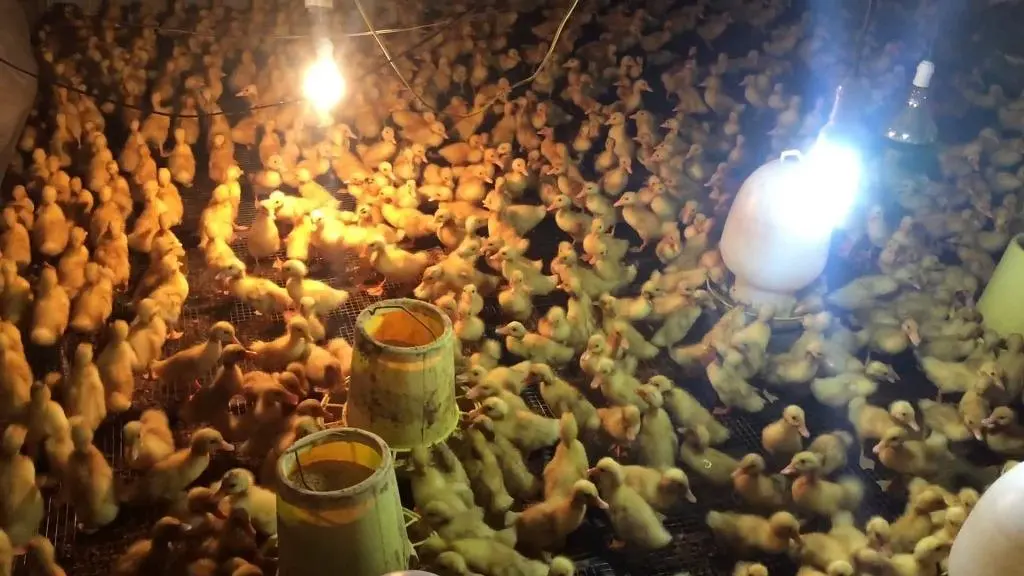 Image of gosling farming
4. BROODING PROCEDURES
Step 1: Prepare the Brooder
Set up the brooder in a draft-free location with a dry, elevated floor. Spread a 7–10 cm layer of rice husks or a thick layer of dry straw to prevent goslings from coming into direct contact with the cold floor.
Step 2: Install Heat Lamps
A 175 W infrared heat lamp is sufficient for approximately 2.5 m² of brooding area.
Hang the lamp 50–60 cm above the litter to provide optimal heat distribution.
Step 3: Preheat the Brooder
Turn on the heat lamps 3–4 hours before the goslings arrive. Immediately place the goslings into the preheated brooder upon arrival. Maintain the brooding temperature at 32–35°C during the first week.
Goslings are highly sensitive to cold stress. Exposure to low temperatures can predispose them to disease. The easiest way to evaluate brooding temperature is by observing their behavior:
+ If the temperature is too low: Goslings huddle tightly together in groups. Increase the heat supply, minimize drafts, and separate weak birds for additional care.
+ If the temperature is appropriate: Goslings will move freely, eat, and drink normally.
Recommended brooding temperature during the first month:
| Week | Recommended Temperature (°C) |
| Week 1 | 32 – 35 |
| Week 2 | 27 – 29 |
| Week 3 | 25 – 27 |
| Week 4 | 23 – 25 |
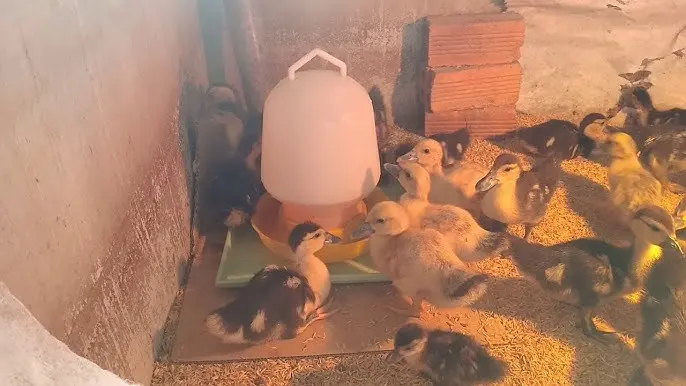 Image of gosling farming
5. FEEDING AND WATERING MANAGEMENT
– Geese are strict herbivores. Their diet mainly consists of commercial feed, green vegetables, grasses, and grains. During the brooding period, provide a mixture of rice bran, corn meal, and clean, tender leafy vegetables.
– Avoid feeding high-protein ingredients too early. Protein-rich feed ingredients may be gradually introduced after 15 days of age by mixing them into the diet.
– Drinking water is equally important. During the first 7 days, provide boiled and cooled drinking water. Water-soluble preventive products such as COLI 1200 WS or CHICKIN may be added to drinking water to help improve leg strength, feather development, and reduce the risk of omphalitis (navel infection).
– Position drinkers high enough for goslings to reach with their beaks. Do not place drinkers directly on the floor, as spilled water can wet the feathers, causing chilling and diarrhea.
– Always keep feeders and drinkers clean to minimize disease risks.
Proper gosling brooding is one of the most important management practices in goose production. Applying these recommendations will help establish a strong foundation for healthy growth, improved survival, and enhanced productivity in later production stages.