
Have you ever seen the unusual phenomenon of hens laying eggs without yolks? These eggs are also commonly called “rooster eggs,” and they occur when laying hens experience abnormalities in their reproductive cycle.
For long-time poultry farmers, it is not uncommon to encounter very small eggs — sometimes less than half the size of a normal egg — containing only egg white without a yolk. So, what causes hens to lay such eggs?
First, under normal conditions, it takes approximately 23 to 27 hours for a chicken egg to form and be laid. Yolk formation usually occurs during the first stage of this process. However, in some cases, reproductive tissue may detach and enter the oviduct, triggering egg formation by misleading the hen’s body into recognizing the tissue as a yolk.
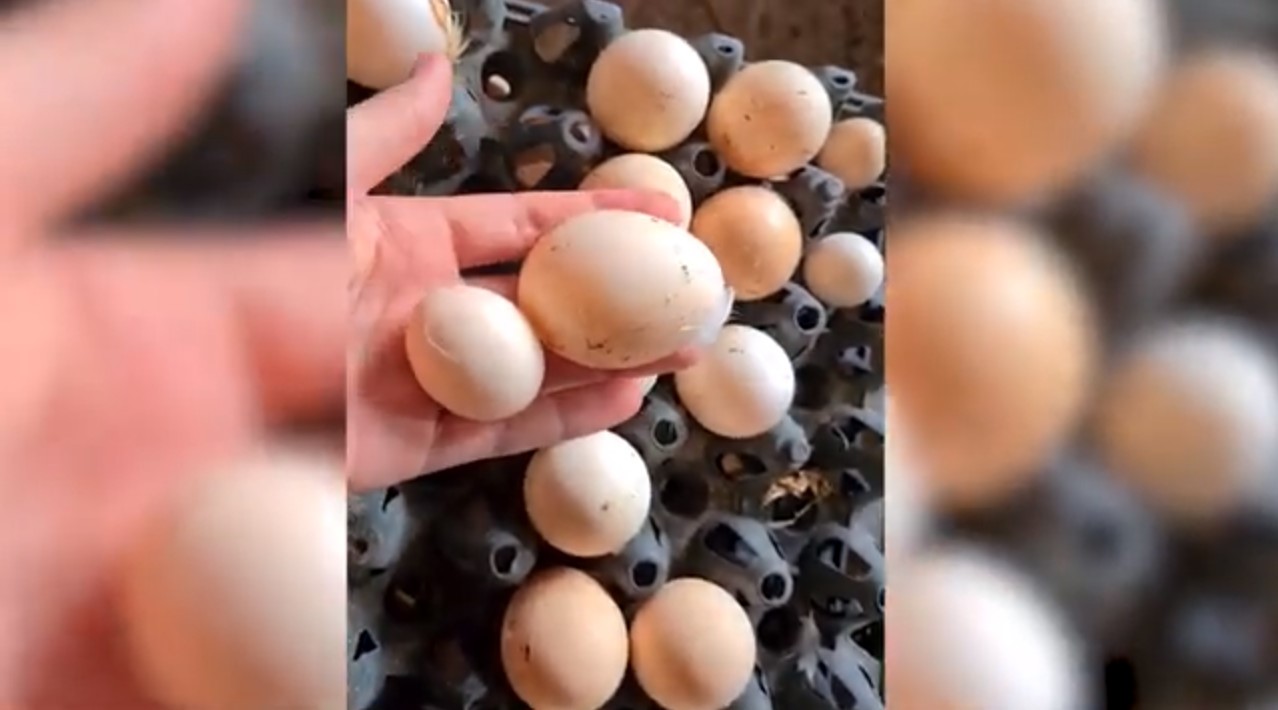 Illustrative image of yolkless eggs in hens
Secondly, this phenomenon is often observed in pullets laying eggs for the first time. At this stage, their reproductive system may not yet be fully developed to support normal egg production. It may also occur in older hens whose reproductive organs have degenerated with age, making them more prone to reproductive disorders that can result in yolkless eggs.
Thirdly, some poultry keepers refer to yolkless eggs as “rooster eggs,” believing that they are laid by roosters. However, there is currently no scientific evidence supporting this belief. One thing is certain: eggs without yolks cannot hatch into chicks. Therefore, these eggs are usually kept as curiosities or consumed as food. In some regions, people carefully preserve them because they believe “rooster eggs” bring luck and prosperity.
Notably, some Dao ethnic communities still maintain the custom of hanging “rooster eggs” from the ceiling of their homes. Many families have preserved these eggs through several generations as symbols of hope, prosperity, and a prosperous life.
 Illustrative image of yolkless eggs in hens
Should you worry if your hens lay eggs without yolks?
If your flock occasionally produces yolkless eggs, there is usually no need for concern. Farmers should simply monitor whether this happens frequently. If only one such egg appears occasionally within the flock, it is generally considered normal. However, if the condition occurs repeatedly, it is important to review the flock’s nutrition program and reproductive health management to ensure optimal production performance and economic efficiency.
 Illustrative image of laying hens
In fact, yolkless eggs can be a beneficial food choice for people following weight-loss diets or those with high cholesterol levels. These eggs contain high levels of protein but are free of cholesterol and very low in calories. In contrast, the yolk contains most of the calories, cholesterol, and fat found in eggs. Therefore, if your hens lay yolkless eggs, they can still be used as a nutritious food source.
This interesting information about hens laying eggs without yolks helps poultry farmers better understand their birds and apply more appropriate nutritional and management practices.